“Dear Ian. Your positive impact on our setting has been nothing short of transformational. Your expert knowledge, coupled with extensive experience, built the capacity of our staff and was tailored to our unique, challenging context. Thank you!” Comment from a Principal of a NSW DET primary school, NSW
Get in touch to discuss how In-School Training could work for your school.
In-School Training
I work primarily as a behaviour management trainer, working directly in schools to support staff and school leadership in building consistent, practical, whole-school approaches to challenging behaviour.
Many schools find that having someone with extensive experience come into the school, observe what is happening and provide an independent perspective can be extremely valuable. I work alongside staff in a supportive and constructive way, helping them understand what may be contributing to the difficulties they are experiencing and identifying practical strategies that can make a difference.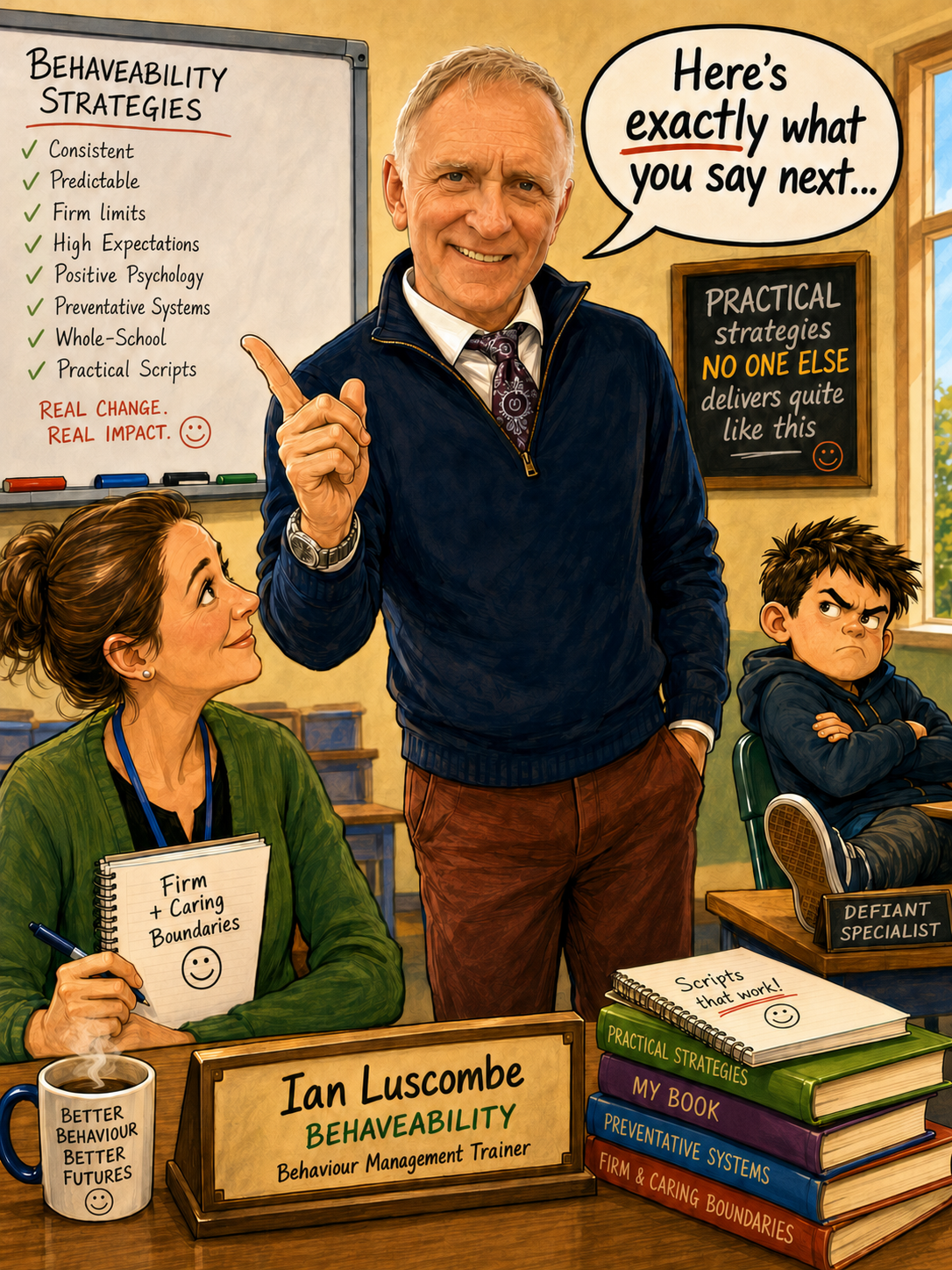
A key point of difference in my in-school training is that I don’t just explain what teachers should say or do — I model it alongside them. When a student is being defiant or refusing to follow an instruction, I can stand beside the teacher, coach them through the interaction and provide the exact words to use. If the student continues to refuse, I help the teacher respond to the next stage of the interaction, again providing practical language and guidance in the moment.
Depending on your school’s needs, I can:
- Observe, support and mentor beginning and experienced teachers, as well as school executives.
- Review and evaluate your school’s behaviour management and wellbeing systems, providing a written report with practical recommendations.
- Work directly with individual students experiencing challenging behaviour and help staff develop sustainable strategies to support them.
- Run staff development days, conferences or staff meetings tailored to your school’s specific context.
Every school is different — consultancy is tailored to your setting, your staff, and the students you’re most concerned about.
WHAT I COVER
I have extensive experience providing professional development to schools in:
- The establishment of whole-school systems of behaviour support.
- Embedding positive interactions with students into the culture of a school.
- Developing a school climate where the wellbeing of students — social, behavioural and learning — informs the way teachers interact with them.
I have a simple saying that underpins much of my work:
“When in doubt, ask the question: What is in the best interest of the student?” Best interest of the student in the long term at least. In the short term they might not necessarily like following our fair and reasonable instructions.
I also provide practical strategies for managing students experiencing emotional, behavioural and/or psychiatric difficulties; insights into the meaning behind challenging and disordered behaviour; and mentoring for individual teachers or groups of staff.
WHAT STAFF WILL LEARN
When I provide in-school training, I work with staff over the course of my involvement to develop their understanding and practical application of key behaviour management concepts. These include:
- The three major strategies for managing disruptive behaviour:
- Getting the academic program right so that a student is neither bored nor frustrated.
- Teaching students the behaviour we expect from them.
- Teachers managing themselves so they can be effective role models, particularly for students who may have had limited positive social role models.
- How to communicate with students experiencing emotional difficulties.
- The importance of managing our own emotions — and practical ways to do this.
- The use of preventative scripts to encourage compliance before difficulties arise.
- The use of corrective scripts when limits need to be set around behaviour – these scripts are given to teachers.
- The importance of maintaining a high level of positive interactions and feedback in relation to corrections.
- How to give instructions in ways that encourage compliance.
- How to promote consistency among staff when responding to students with challenging behaviours.
- How anxiety can manifest as disruptive behaviour and practical ways of responding to it.
- Practical, step-by-step methods for dealing with non-compliance, including the actual words teachers use, the tone in which they are delivered, proximity, redirection, vicarious praise, selective attending, wait time, relationship building and humour.
- School culture and how it can either support or hinder the consistent application of rules and expectations.
- Written rules versus unwritten rules and the impact both can have on student behaviour.
- How to avoid reinforcing a student’s dysfunctional view of the world and themselves. Teachers can provide an alternative positive role model to dysfunctional role models a student may previously have experienced.
- Why some students say nasty or hurtful things and how to respond when they do.
- Why simply aiming for one-third positive feedback does not necessarily work, and practical ways to address this.
- “We get what we accept.” Exploring why we sometimes accept behaviours we genuinely do not want to see, and developing strategies to break this common cycle.
- Whether instructions are optional — and the messages we send when they are treated as such.
- The limitations of trying to avoid a child’s “triggers” and why this approach does not always address the underlying behavioural difficulty.
- What to say when you don’t know what to say.
- The role of sanctions, including detentions and suspensions, when dealing with certain behaviours — and how they can be used appropriately and consistently.
- Why teaching is a free personal growth course!